Content Management
You can add the content that will be published on external resources to SimpleOne to go through all stages of content development before the publication.
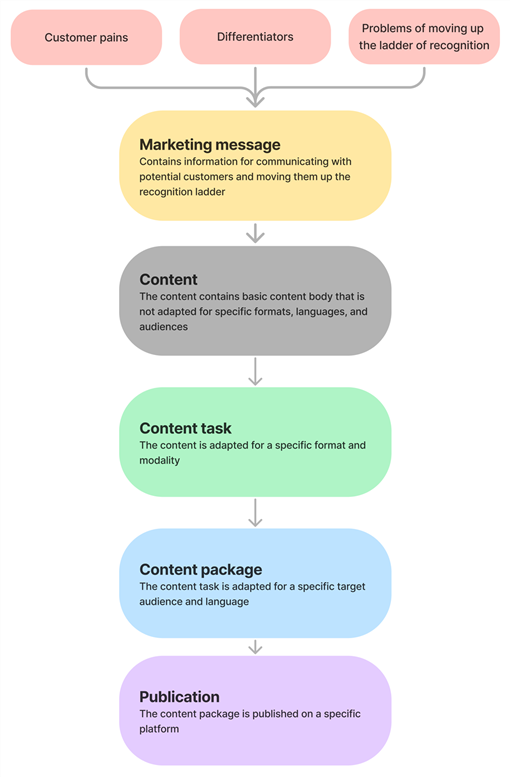
There are four major stages that the content goes through before being published:
- Marketing message – add marketing messages to communicate principal information about the value of your products and services to your clients.
- Content – create the general concept of the content, not yet adapted to a particular format, modality, target audience and language.
- Content task – create a content task for each format in which you need to publish the content.
- Format – a way of organizing and presenting information. Examples: article, case, interview.
- Modality – a content characteristic that indicates the target channels of perception. Examples: text, photo, video, audio, stream, application.
- Content package – create the packages to pack the content tasks for all required languages and target audiences.
- Target audience – a group of people the content targets.
- Content language – the language to which the content is localized.
When all these stages are completed, you can create Publications for the completed content packages.
The diagram below illustrates the content development stages:
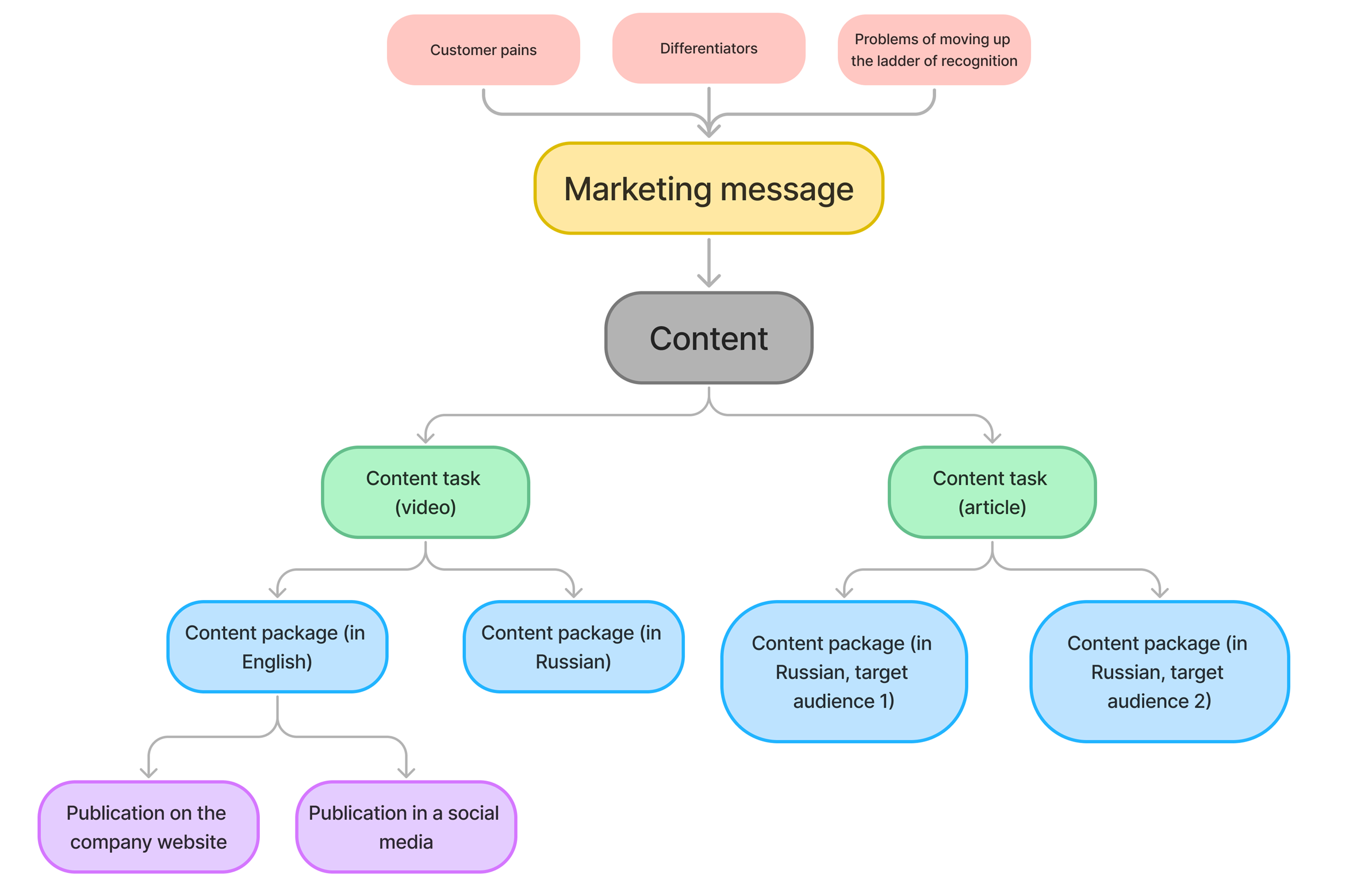
Example of content development:
Marketing Messages
The article contains information on how to create marketing messages, communication objectives, and recognition ladder transition problems.
Content Items
Read the article to learn how to create and decompose content items.
Content Tasks
Learn how to create tasks for the adaptation of content to specific formats and modalities, and how to configure these entities.
Content Packages
Read the article to find out how to create the packages for adaptation of content to specific target audiences and the localization of it. The article also has information on how to configure the target audiences and content languages.
Content Tools
The article contains information about additional tools to help you manage content: content kanban boards, references, and tags.